
To be truthful, most shooters can tell you how a drill felt, but very few can tell you how it went. That is where the data comes in. When you are serious about becoming better, gut feeling is not sufficient. You must monitor performance, identify trends, and close gaps with a purpose.
Tactical shooting targets are where it happens, not only as visual references but as a means of data-driven improvement. This is how you can begin to train smarter, not harder.
Score everything, but keep it practical
When you are working on drills and not keeping track of your hits, you are guessing. You must count all shots, even during fast or scenario drills. Tactical shooting targets that have specific zones (A/C/D scoring, headboxes, or color-coded sections) are helpful. They will allow you to determine where your rounds are hitting.
Divide your results into:
- Accuracy: Bulls in the target area
- Repetition: Are your groups repeating after the drill?
- Time: Are you faster with accuracy or moving too slowly?
You don’t have to be perfect. It involves identifying patterns. Are you ever low-left on time? Do you miss more on transitions than on reloads? The data tells you what to work on.
Record time and hits in combination
Your timer is your accountability partner. However, pair it with hit data to get the whole story. For example:
- 1-reload-1: Division time + hit quality per shot
- Bill Drill: Time versus A-zone hits
- El Presidente: Time + hit factor (points/time)
Record your speed and accuracy, and you will discover your optimal speed. Force it too soon, and you kill your hits. Wait for too long, and you stagnate. The sweet spot? Almost to the point of breaking, always stretching control.
Utilize targets that provide candid feedback
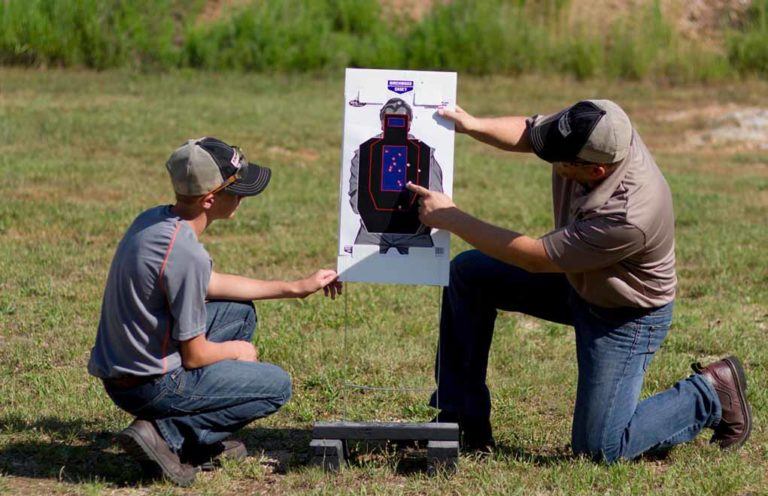
Reactive shooting targets, such as steel or self-healing silhouettes, will make you aware right away whether you are off. But do not depend on the ding. Analyze paper tactical targets. Walk the line following a drill. Underline your hits. Time it. And then log it.
Then, you will develop your own database of performance. Not some random drills, but objective improvements. Additionally, track target results with a phone, photo, or training journal. You will be surprised at what a few notes will tell you in a month.
Create a basic performance log
You do not require spreadsheets to analyze your tactical shooting skills. Simply note:
- Date
- Drill
- Time
- Placement of score or hits
- Performance notes
You will gain insight with even two lines a session. You will be able to notice which shooting target is the most effective, which exercises are worth the money, and which mistakes you continue to make in stressful situations.
The takeaway
Tactical shooting targets are not just simulators; they demonstrate the reality in black and white figures and bullet holes. What you measure, you can manage to make better. Don’t be content with ‘’that felt good.’’ Know it. Prove it. And then improve a little more with each session.
